splash
Welcome
Ambuj means lotus and the lotus is the symbol of truth, auspiciousness and beauty (satyam, shivam, sundaram)
Posted By Nitesh Ambuj on November 17th, 2009

Aristotle had once said, “Humans are social animals”. True, it is our basic nature. We can’t survive outside society. To fulfill our different needs, we have different people in our society? The role based arrangement is well constructed. We deal with colleagues at office while we share our emotions with our friends, families. We need [...]


You Are Viewing Politics

Make A Difference by Doing Your Karma

Posted By Nitesh Ambuj on December 30th, 2011
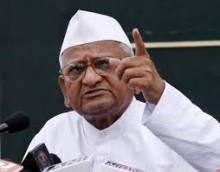
It is so easy to ridicule Anna and his team. You may say that his effort will not be able to curb the corruption in India. It’s a big problem, rooted deep in the system. But I want to ask each one ridiculing him, how many times u have stood up for a cause?? How many times you have tried to contribute your single bit. It takes a courageous man to do so. And, we must salute Anna for this.

As the new year is approaching, let’s make sure that we’ll try to contribute our single bit to our own work, to our own faith. Let’s try to forget about results and concentrate only on our Karma.

Listen to the podcast [posted above] for more content…


Why Anna Is Important?

Posted By Nitesh Ambuj on August 20th, 2011

Anna [not the person but the movement] is important, not because he is fighting against corruption or the arrogance of Indian government but because he has ignited several minds. He may not be fighting for something which you believe in, but he has surely shown you a way to protest, to raise your voice against any misrule. He has induced the fighting spirit in this generation of youth. India as a nation is in the midst of a strategic inflection syndrome. Unity and transparency is at utmost importance at this juncture. Compromising on core Indian values can further deteriorate the condition of this country which prides in its historical heritage and cherished culture.

End of corruption, which itself is a herculean task, is not end of the road. This is a curvy road and you have got to deal with these twists and turns. If you wish to stand for a social cause, you can’t ride a cool blow on the back seat. You have to eye the sharp turns and be ready to jump on the bumpers more often.

You may be wondering why the path ahead is so scary. What’s the next big thing? Well, there are many. The first item which may pick momentum is “Right to Service” act. It is required to further cure the corruption and it will make sure that government officials are also responsible for their duties. They can’t take things for granted. In short, there would be a timeline associated with every official task and government employees will be forced to complete that task in given timeline. For example, your passport should be ready in 15 days. If it gets delayed the concerned officials will be punished. This act has already been implemented in Bihar. Rest of India has yet to adopt this.

Right to Recall is another such demand which will empower “aam junta”. This act will makes sure that politicians are not taking things for granted. Public will have power to call them back, anytime. Once elected they cannot be lethargic for five years. They will have to work if they want to continue.

If you are determined to change the system. If you are out on road and if you are willing to fight, be prepared for a long battle. Calm, composed and confident approach is need of the hour. But, don’t succumb to any pressure. Be firm, be sure. It may have short term wins and short term losses but the truth will prevail in the end. As they say – Satyameva Jayate.

History is not always a matter of past

Posted By Nitesh Ambuj on October 26th, 2010

Yes, you read it right. History is not always a matter of past. It could be a matter of your future. It could be a decisive factor in taking your future decision and / or shaping your future.

If we look at the recent Ayodhya epic, we understand that history never leaves us with our present. It always comes back to let us know its importance. There might not be much fuss about Ayodhya verdict but it doesn’t mean people have moved ahead of their religious identity. I agree with Rajdeep Sardesai when he says:

The majority community in new India doesn’t want street violence, but is not averse to asserting their religious identity while endorsing the idea of a ‘grand’ Ram temple in Ayodhya. Likewise the minorities would like greater education and job opportunities, but they are also unwilling to ‘surrender’ their claim to a mosque at the disputed site.

Have you ever thought why we have not yet reached to a congenial solution in Kashmir? Why there are so many divergent views? Well, behind everything – there’s History. Or rather say, few historical blunders. How to solve it? Lessons learnt from so many historical mistakes will show the path to a greater and brighter future. Let’s hope to see it soon.

The History is not only the roots of every Indian problem. It is applicable even to an International arena. Look at the on going battle in Afghanistan. Why is it haunting not only America but entire world? If you would delve deep into the root causes – you’ll find your answer in the traumatized History of this landlocked country.

The point which I want to make is, we should always treat History as a precious asset. To avoid any future commotion we should visit an clean this asset again-n-again. Couturiers which have forgotten their history will have no future. So, revisit your History to build a brighter future.

Of The Fools, For The Fools, By The Fools

Posted By Nitesh Ambuj on August 11th, 2010

Democracy is considered as the best form of government and India is the largest democracy of the world. We [ Indians ] are a democratic nation from last 60 years. But,

Why 42% of India still falls below the international poverty line?

Why 34% of India is still uneducated?

Why we have a national crime rate of 167.7%?

In search of these answers I tend to agree more with George Bernard Shaw when he says Democracy is a government of the fools, for the fools, by the fools than Abraham Lincoln’s original thought where he says Democracy is the government of the people, by the people, for the people.

 india-for-fools

People are core of the democracy but collectively can they form a better government? I doubt. Albert Einstein had once said, "two things are infinite: the universe and human stupidity; and I’m not sure about the the universe". True. On a large extent people are stupid. They are emotional. They are jerks. Most of them are afraid of themselves, of their own reality; their feelings. They are simple careless. They don’t care. And, if they don’t care you can’t expect them to make a collective wise decision.

 politicians-for-fools 

In Democratic India, we have seen prime ministers whose names were not known to more than 50% of the public – till the time they became prime minister. I wonder – what kind of democracy is this? Our current Prime Minister doesn’t even bother to go to public and fight an election. He is happy with the blessings of monarchy – which again increases my doubt over the form of democracy we have adopted. 

We have a democratic state like Kashmir, whose problem is getting bigger and bigger. None of the democratic institutions are able to solve this. We have a democracy where more than one million people across 10 different states are fighting against government since past two decades, and our democratic institutions are helpless. 

If we go back in history and see the origin of democracy we’ll find the traces back in India. The place was Vaishali, a city in North Bihar which came into existence around 4th century BC. The famous King Nabhaga abdicated the thorne due to an accusation about Human Rights violation. The city then declared itself a Democratic Republic (Prajatantrik Ganarajya) – first democracy of the world.

 tradition-for-fools 

The point which I want to make here is – we [Indians] have seen various forms of government in India and democracy has never been a successful form, at least not in last 2500 years of known history. I would not like to comment as what should / could be the alternative but I would surely recommend a revisit to Indian History. Every nation has its own culture, own way of living and own way to govern. We need to understand our way of democracy or rather say government. In stead of blindly following global form of democracy we need to rely more on something which we have learnt from our past.

I know this subject can’t be discussed  in just 500 words. It needs lots of study, lots of facts, lots of brainstorming. Though, I would just like to trigger a discussion which can help us to think on various spectrums of this topic. 

Submitting this post to “Mera Bharat Mahaan” contest of Blogadda and Pringoo

Results and Beyond

Posted By Nitesh Ambuj on May 18th, 2009

On 7th August, 1883 when Indian National Congress was 8 years old, Shri Aurobindo has said, “We cannot afford to raise any institution to the rank of a fetish. To do so would be simply to become the slaves of our own machinery.

Now, when the congress is 124 years old I would repeat the same. There’s a reason why I recalled this famous saying of Shri Aurobindo. I was watching the election outcomes on Saturday when I heard the 5th generation of Nehru-Gandhi, Mr. Rahul Gandhi, talking to reporters. He was praising the efforts of Advani. He was saying, at 80+ years of age Advani fought with great determination. He also said, “Great Job Done Mr. Advani”. A person, who has served this country for more than 60 years, is getting a pat on his back, from a 5 years old politician, just because he belongs to a particular family, a particular institution. That’s the irony of Indian politics. We must ask ourselves, are we matured enough for a democratic system like this?

This result opens up many dimensions which we must analyze. The first point, which I have already raised, is much bigger than our normal assumption. Why we always go back to a particular family? Can’t we produce a good leader amongst more than 10 billions of our population? Do we still have the slave mentality?


parliament  indian_youth


The second point is talking about Indian vision. We all agree to the fact that as a country India has its own set of problems and to solve them we need our own solutions. We have a different culture, different tradition, and different demography and we need a different strategy to tackle them. We can’t run our country on the same model US, UK or any other country is following. We need a political system which addresses an “India-centric-vision”. When our people will understand “who we are”? When we will realize that there’s more to think than few emotional issues? When we would start talking rationally?


L K Advani  manmohan_sonia_3-300x197


Next item to be discussed is what kind of politics we want in our country? I can see more than 100 secular parties which ask for vote because they are secular. It looks strange to me. When that is the only criteria to ask vote then why we need 100+ parties. We can have just one secular party? If there’s any other difference, let’s talk about them? Indian politics is revolving around this secular and communal philosophy which looks absurd to me.  We need parties with vision and not parties with religion. Let’s talk about issues like connecting cities, connecting rivers and connecting people. I get few arguments, if we have issues why don’t we talk on them. Yes, I agree we have issues but there’s no need to politicize them. There are other platforms to tackle those issues.

There are few good outcomes also from this election. Declination of caste politics from north India, especially from UP and Bihar, is one of them. The defeat of almost all “bahubalis” is a great thing for Indian politics. Though there are few wrong traditions also popping up, like, emergence of MNS. Mumbai went through a bad phase last year. People came forward and chanted the national anthem in one voice but few of them voted for a hard-core regional force. We made some good progress in this election but there’s a long way to go. I hope we’ll have more awareness towards this. I hope we’ll get better maturity from voters in coming future. I hope we would realize our real issues and our real leaders.

A Dig @ Indian Politics

Posted By Nitesh Ambuj on March 24th, 2009

A CD has created ripples in Indian politics. We all are talking about that, some words which are spoken by Varun Gandhi (not proved or authorized yet). We all know that words mentioned or said in that CD is not right, it’s wrong. But the question is why so much of media hype? Why everybody is trying to single out Varun Gandhi? What happened to Sajjan Kumar? What happened to Jagdish Titler, Sanjay Dutt, Abu Aajmi, Raj Thackrey, Pappu Yadav, Mh. Shahabuddin, Mh. Taslimuddin and many such politicians?

Is it because he has a surname called “Gandhi”? If that’s the case, are we still living in democracy? The point is, the entire political system in India needs a radical and thoughtful change.

I didn’t want to make any comment on this as there’s no point highlighting something which has no significance as far as masses of India is concerned. Normal Indians are still bothered about food, clothes and shelter regardless of religion, region and caste. But the politics or rather say politicians have something else in mind. They want to divert issues. They know that they have no better issues than hate speeches, religion and caste. They know that a normal Indian is very emotional, very sensitive. They know that their faces are colored when take bath in religious and regional streams and their tainted faces are grimly hidden behind those colors.

In theory, we are the largest democracy of the world, but, in practical, we are still not a mature democracy. We are largest because we have people and we are immature because we have uneducated, unaware, unconcerned people. When I say uneducated I mean the education which injects a nationalistic approach and not the education which teaches A, B, C, D.

When we want to understand India, and the Indian politics in whole, we should ask few questions to ourselves.

  • Who are we?
  • Before 1947, what was the concept of country, nation and Rashtra?
  • What happened after 1947?
  • Why Pakistan, India, Bangladesh and why not a single Bharat?
  • Why Mahatma Gandhi was killed?
  • What went behind injecting “secular” word in Indian constitution?
  • Why reservation, what purpose it solves and how long it will go?

Before we talk on politics in today’s India, we should ask few questions to ourselves.

  • What is Congress and why the name Congress?
  • Why BJP is communal and why parties like SP, BSP, and RJD secular?
  • Are we satisfied with issues like religion, region, and caste or we need issues like Economic Policies, Foreign Policies, Rural Development, Infrastructure, Security and Prosperity?
  • We need regular politicians or we need part time politicians?
  • We need national parties or regional parties?
  • Do we need some changes in our political system?

Thinking on these questions will certainly give a better understanding of Indian Politics and it would surely have a long term impact. Let’s learn from our past and look for a bright future. Let’s enjoy the fruits of democracy and let’s throw unnecessary elements out of this system.