
splash
Welcome
Ambuj means lotus and the lotus is the symbol of truth, auspiciousness and beauty (satyam, shivam, sundaram)
Posted By Nitesh Ambuj on November 17th, 2009

Aristotle had once said, “Humans are social animals”. True, it is our basic nature. We can’t survive outside society. To fulfill our different needs, we have different people in our society? The role based arrangement is well constructed. We deal with colleagues at office while we share our emotions with our friends, families. We need [...]


You Are Viewing Marketing

Why Do I Need a Social Media Agency?
Posted By Nitesh Ambuj on August 18th, 2011

Social Media has emerged from last couple of years as one of the most popular digital media platform. It has been used as a tool for listening, monitoring, conversing, connecting, advertising and marketing.  It has changed the way we have been communicating till now. It has re-defined the social connection. And, the most important fact is – It has just begun. Things are yet to take a final shape. Businesses across globe are utilizing this new media to improve their current communication model.

man-telescope-fullcrop

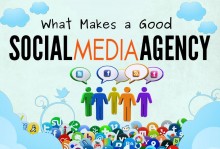
In between all this buzz, there are businesses which are still struggling with the obvious question – Why do I need a social media agency? Their basic understanding is – Do I really need an agency to manage my Facebook and Twitter account? And, the basic answer would be – No. You don’t need an agency to manage your Facebook and Twitter account. But, social media is not all about Facebook and Twitter. It’s not about writing few posts and tweets. It’s much more than that. Let’s look at the importance of social media agencies.

Real-Time Information : Time is money and just-in-time information has a great value for any business. The pace of change in business is growing by leaps and bounds. To get competitive edge and access a piece of information before someone else grabs it, is getting crucial. Real time information prompts you to take a quick call, a call which can even change the fate of your business. Information is floating in public domain and all you need is to grab it as quickly as possible.

Meaning out of Mess : Social Media is messy, unorganized and uncontrolled. But, there are real people creating some real data. And, the entire ecosystem is growing. You need to find a way to get meaning out of this mess. Out of millions of posts, thousands of them would be related to your domain and hundreds of them can surely impact your business. You need to rely on a strong filtration so that you don’t miss any relevant information.

Connection and Collaboration : Connecting with your customers, your employees and your competitors is very tough in real life. Social media makes it easy. You can not only connect with people but also collaborate. You can share information, exchange ideas, views and listen to the feedback. But, do you have in-house expertise to utilize different social media channels to do so? Do you monitor them 24*7? How much in-house person hour you can devote on this?

Research and Grow : Social Media is a great source / tool for doing research. There are millions of people talking on thousands of different topic at any given point of time. These people are real people and most of the time they share data which is relevant to them. A company which is aiming a research before taking a call can easily utilize this flow of information. They can even talk to people who are conversing on their area of interest. They can connect with subject matter experts.. If needed – they can do online surveys and / or check out previous such surveys / polls done by other agencies.

Enhance +ve WOM : We had a lesson in childhood. Our teacher used to ask,  “how can you make a particular line small?”. He used to draw a line on blackboard. Most of the students used to rub from one side to make it small but teacher had a different solution. He used to draw a bigger line near that existing line. It makes the original line smaller without doing any harm. The same theory applies with your online impression. You need to draw a bigger line of your positive Word Of Mouth. If will help the negative flow of data about your organization smaller. Do you know how to do that? Which channel to use? What time?

Having said all this, you shouldn’t make haste. Don’t appoint a social media agency just because everybody else is doing so. Do your homework first. Understand your business requirements. Make sure that the agency your are appointing also understands your business. And, most important – make sure that the agency has a subject matter expert from your domain.

I’ll try to touch base on this topic again in my further posts. Drop me a mail at info@niteshambuj.com for any specific question on this.

SEO is overhyped

Posted By Nitesh Ambuj on January 10th, 2011

Type SEO in Google and you’ll get around 26 million results in less than a second. Wow. Isn’t that amazing? Look at the volume. How much content has been created around this concept? But, is it really that important? Or, it’s just because of a hype created around this term?

Why SEO?

SEO is a process to improve the visibility of a website in search engines. It starts from the design and development phase and continues till entire life span of the website. You want your website to top the list in a contextual search at search engines. You want your web page to be more relevant, more attractive, and more friendly to search engine crawlers. You want your customers, potential customers and other stakeholders to find you easily through Google. And, you want more traffic to your website. To achieve all this, you go for SEO.

Who requires SEO?

Remarkable websites like Facebook and Twitter don’t require SEO. They have enough meat to grab million eyeballs. They concentrate more on providing engaging stuffs rather than focusing on adding more meta tags and keywords. Quality writers also don’t care  about SEO. Set Godin would focus more on his next blog post rather than finding a way to top the Google rank, the rank which itself is overhyped.

So, who requires SEO? Average websites having average stuffs require SEO to manipulate the rankings in different search engines. You want to build a remarkable product – focus on the problem you are trying to solve. If your solution is brilliant enough to be recommended – search engines will follow you.

How traffic comes to your website?

When your website is new, most of your traffic comes from direct links. You give this link to your friends, your acquaintances, send emails to your contacts and people visit your website directly. That’s direct traffic. Next stage comes when you have people subscribed to your website. You achieve this by creating quality content, posting interesting stuffs on a regular basis. Once you have significant numbers of subscribers, your search rankings will automatically start improving.

Should I stop SEO?

No. I never suggested that. Keeping few basic items intact is required. Meaningful keywords, tags, URLs, titles, etc add value to your website. It helps in better organization of content. It also improves your internal search. Doing all this is not a rocket science. You just need to have some common sense.

Social Search vs Traditional Search

Facebook drives more traffic to major websites than Google. If you follow the latest trend around web traffic you must have noticed this news. One of the major traffic analysis firms Compete made this statement early last year. They said Facebook drives 13% of web traffic to major websites like Yahoo, MSN, AOL while Google generates only 7%.

What does it mean? All your effort to get higher rank in Google is a waste when social media channels are going to drive more traffic to websites.

Is it happening with all the websites? No. Not Yet. But, going forward social media is going to be the major source of web traffic. In that case, social media optimization will have more value than SEO.

Crux

People will appreciate your effort on your product / solution and not your effort on SEO. 

Beginning of Social Influence

Posted By Nitesh Ambuj on November 8th, 2010

United States Presidential elections of 1940 was revolutionary. It was fought at the backdrop of World War II. The United States was emerging from a great depression. The new president had to take some tough decision about World War, Economy, etc. At that time, an American Sociologist Paul Felix Lazarsfeld was doing a research on influence. Paul was the founder of Columbia University’s Bureau of Applied Social Research. He exerted a tremendous influence over the techniques and the organization of social research and his study was focused on finding out reasons behind people voting for a particular candidate. His finding were not only interesting but also very surprising. A new dimension was emerging. It gave birth to a new communication theory called “Two Step Flow”. 

iStock_000005924713XSmall

This research helped Paul to understand the impact of social opinion. He along with another sociologist Elihu Katz discovered the term called “Opinion Leaders”. It explains – in every society there are people unknown to others, unseen to others who influences decisions taken by that society. Those influencing people are Opinion Leaders of that society. During 1940 crucial US elections, people relied more on these opinion leaders and less on any other issue. Initially, the thought process of influence was mainly revolving around 3 Ms – Mass, Media, Message. But, this new discovery changed the traditional communication theory. The impact of an opinion leader was so high that it surpassed the basic elements, 3Ms of decision making. The new era of communication was born.

This was perhaps the first time when social influence was felt at a large scale. This study captured the attention of politicians, businessmen and also several other researchers. The reliance on humans for conveying messages, promoting brands became higher than ever. This study became a milestone for people trying to understand the influence behind decision. And hence, we can rightfully say – This was the beginning of Social Influence.

Influence : Important or Overrated

Posted By Nitesh Ambuj on July 13th, 2010

Influence is a power that can affect, persuade and cause changes to someone or something. But, to attain this power to get intended output isn’t easy, especially when it deals with people. In order to influence people, we need to discover what is already influencing them. What makes them tick? What do they care about? What are they listening? And, Whom are they listening?


Ghandhiji-Addressing-people

Recently  I was working on a formula for deriving most influential users on social media. This formula was intended to work across sources [Twitter, Facebook, FriendFeed, Identi.ca, Digg, Reddit, etc]. The challenge was not to find people who are influencing others but to find how much influence they have. This was little tough when we had to measure it across sources of various nature. Nevertheless, the formula was constructed and we used it at ContextMine. Once this feature was added to the application, I tried to test it. The first thing I did was to find out who is the most influential user for keyword “Social Media”. I was amazed to see the output. It was showing Pete Cashmore and TechCrunch. You can get the list of most influential users for your own keyword here

Moving further, I tried to research little more on this subject. I came across Twitalyzer which publishes The Most Influential People in Twitter. There are so many other reports on Influence of people in different aspects of life. There is an article on businessweek about The 25 Most Influential People on Web.

  public-speaking
Few questions which may drag attention on this entire discussion are: Do we really need to know who are influential? Does that really impacts my business? I would say – No, this is not required but Yes, it does have impact. We must have this information and how to use it, should be our call.

There is an another thought. Jonah Peretti, who the New York Times called the "viral marketing hotdog”, says, Influence is overrated. He further explains –

We all love the idea of “influentials”—those hyper-connected, ultra-respected thought leaders that can make your product reach the tipping point. But have you ever actually met an influential that can repeatedly and consistently make a product go viral? Probably not, because the latest science and real world experimentation shows that “influentials” don’t really exist, that viral growth is partly random, and that riding a wave is much easier than creating it.

If we consider this thought – nothing is constantly influential. It changes. It acts randomly. The viral effect can be an outcome of a trivial incident or a trigger. But, if we can measure the influence – can’t we use it? Reason may be different. It may be random. But, can we deny the importance of this information? Probably not. Though, how to use this measurement may be a matter of personal / organizational thought process.

Looking for your views.

Aggregation – A New Mantra for Social Media

Posted By Nitesh Ambuj on May 12th, 2010

Aggregation is not a new concept for marketing professionals, but, it’s usage in Social Media is certainly a new buzz for them. As we understand from my previous post [on Social Media Marketing], the need to address this emerging market is fiercely felt. Companies are aggressively placing their marketing budgets to this newly created sphere.

In IT, we have been using aggregation in various forms. Drudge Report and The Huffington Post started the news aggregation while lots of other RSS feed readers started aggregating syndicated web content. These services played a big role in taking the web content easily to million of users who didn’t have time to browse websites one-by-one. After the social networking boom the next round of aggregation started in the form of Social Networking Aggregation. Lots of products / services were launched to cater this need. The new era on Internet is the era of Social Media. It has become the numero uno reason for browsing internet, surpassing the previous popular reason, porn. Plenty of social media sites are running and by each passing day it’s getting crowded more n more. Tracking each of these services is tough, hence, we need another form of aggregation, Social Media Aggregation.

SocialMediaAggregator5

Websites like Facebook, Twitter, FriendFeed, Identi.ca, Digg, Reddit has their own distinct features. Different set of people use these websites for different reasons. As a marketer I get a tough time when I try to track online presence of my brand across all these websites. In this scenario I would love to have an aggregator which can monitor all these social media websites and give me a consolidated report. ContextMine is one of such tools which does this aggregation. This market is also diverse in nature. For example, there are specific search engines to search content / messages floating on real time web. Collecta is one of those search engines.

Aggregated data which is contextual and real time, gives a real feel of your social reputation. Marketing professionals are already planning to utilize this domain, and owing to this need, there are plenty of services ready to cater. It would be interesting to watch out this space going forward.

You Are Six Steps Away From Bill Gates

Posted By Nitesh Ambuj on November 10th, 2009

Human Web which is also known as six degrees of separation, refers to the concept which says, a person in one part of the world is connected to another person in another part of the world at max six levels of connections. It means a person A from India can reach to a person B in USA in just six steps. This cogitation sounds impressive.  Malcolm Gladwell explains this concept in his book, “The Tipping Point”. He says, “Six degrees of separation doesn’t mean that everyone is linked to everyone else in just six steps. It means that a very small number of people are linked to everyone else in a few steps, and the rest of us are linked to the world through those special few”.  He further adds, “People who introduce us to our social circle – these people on whom we rely more heavily than we realize – are connectors, people with a special gift for bringing the world together”.

Human-Web-Six-Steps

The word “Six Degrees of Separation” is associated with an experiment of Stanley Milgram. Milgram was a famous American social psychologist. When he was at Harvard, He conducted an experiment called “Small World Experiment”. This experiment was a combination of several small experiments of social networks across USA. Milgram’s experiment developed out of a desire to learn more about the probability that two randomly selected people would know each other. This was one way of looking at small world problem; other alternative view was to imagine the population as social network and try to find out the average path length between two nodes. Milgram’s experiment was designed to measure these path lengths by developing a procedure to count the number of ties between any two people.

There are many critiques of this experiment and there are several experiments done after this. Though, Milgram’s experiment still tops the list. When we see these experiments in the context of marketing we realize that connecting to people is not that though. We just need to learn few basics like –

How people are connected to each other?

Factors which influence people?

Who are connectors?

How to become a connector?

Difference between Marketer and Connector?

When we take these basic to social media we get few more question.

How Social Media operates?

How Social Media influences people?

Role of connectors in Social Media?

Social Media as a Marketing Tool?

I’ll try to touch each of these questions in my series of posts on Social Media & Connectors.  Suggestions / Views / Comments are most welcome.

Twitter – The Next BIG Thing

Posted By Nitesh Ambuj on June 26th, 2009

Yet another internet meme and this time it’s going bigger and bigger. As the typical nature of internet meme suggests, it’s spreading from person to person, inbox to inbox and from chat windows to YouTube videos. Yes, I’m talking about Twitter, the latest sensation on Internet. It is getting lots of attention these days. The craze is so that when we arranged a small tweet up in Kolkata, it was covered by media without any hesitation. When we analyze the usage of twitter, it gives interesting results. Starting from spreading business to connecting to the fan bases, it is being used for all possible communication channels.  I also found few college going students who are using twitter as their regular diary. This proves the diverse use of Twitter and that makes it vastly popular amongst all sections of the society.

Twitter Bird


When we look back at the history of Twitter, we would agree with the Wikipedia which says, “The tipping point for Twitter’s popularity came at the 2007 South by Southwest (SXSW) festival in Austin, Texas.” It was the event which changed the fortune of Twitter and it never looked back from there. It was an excellent marketing thought, well planned and well executed.

twitter_bird_follow_me

Looking at current developments in-n-around twitter it seems to be going stronger than imagination. It’s not going to be just a fashion mark on social networking turf but it’s going to challenge biggies like Google and Microsoft.   Very recently I read that Google is going to launch a search engine for micro blogging services like twitter, an important development in web world. Marketing experts are writing tons of theories as how an organization can leverage twitter for their business needs, one of those theories is here. Even the evolution on twitter has also become a talk of the town and online technical magazines like TechCrunch are also reporting it. These all developments show that Twitter is going to become the next BIG thing on internet.

Like entire world, I too have started tweeting. You can follow me @nambuj.


Here is a poll you may like to answer..

[polldaddy poll="1753056"]